Penis Extenders & Stretchers: Complete Guide
Penis extenders are traction devices designed to apply sustained, controlled tension to penile tissue. They are often marketed for cosmetic enlargement, but traction also has medical applications, particularly in Peyronie’s disease and penile-length preservation.
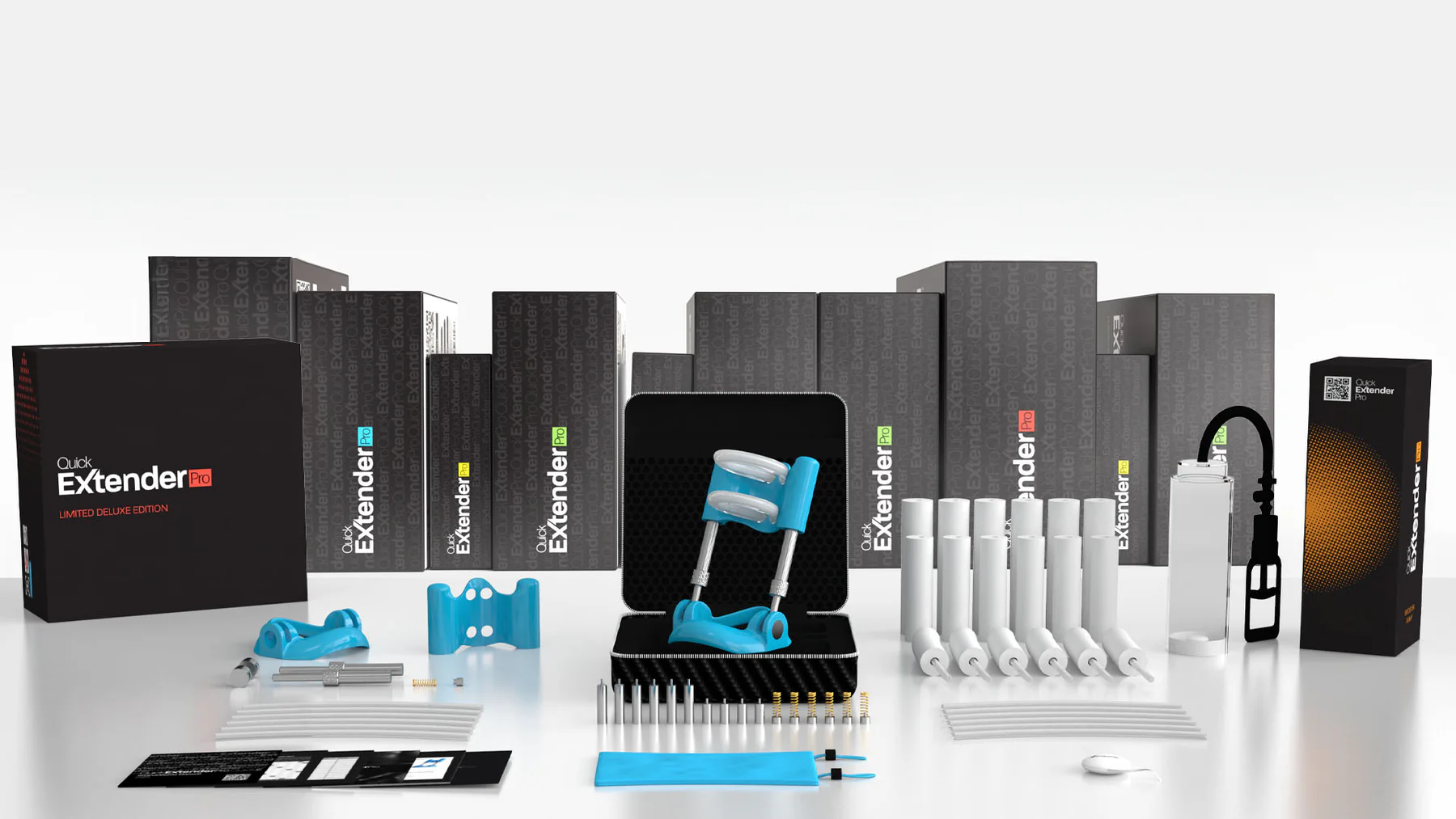
✓ Multiple package levels
✓ Strong adjustability and comfort-focused design
✓ Our preferred overall choice for most consumer buyers
This guide focuses on how extenders work, what the research does and does not prove, realistic expectations, comfort and safety. If you already know you want to compare products, go straight to our Best Penis Extenders ranking.
What is a penis extender?
A penis extender is a wearable mechanical device that applies longitudinal traction. Most systems use adjustable rods, straps, nooses, vacuum caps or hybrid attachment systems to hold the penis under tension for repeated sessions over weeks or months.
The consumer term penis extender overlaps with the more clinical term penile traction device. The underlying principle is similar, but the evidence, intended use, regulatory status and recommended wear protocols can differ substantially between products.
How penile traction is supposed to work
Traction relies on gradual tissue adaptation under sustained mechanical stress. In clinical contexts, controlled traction has been studied for penile length, curvature and shortening. The important point is that results come from repeated use over time rather than from a single session.
That does not mean every commercial extender has been independently proven. Evidence for the traction category should not be treated as automatic proof for a specific brand.
Do penis extenders actually work?
Small clinical studies and systematic reviews suggest that traction can produce modest increases in penile length after consistent use for several months. European Association of Urology guidance allows penile traction therapy to be considered as a conservative option for increasing length, while also noting the limited quality and heterogeneity of the evidence.
For men using traction because of Peyronie’s disease, the evidence base is different and in some respects stronger because the goal may include curvature reduction and preservation or restoration of length. See our dedicated guide to penile traction for Peyronie’s disease.
What results are realistic?
Expectations should be conservative. Published studies in men seeking length enhancement have generally reported modest gains rather than dramatic changes, and protocols often require months of regular use. Individual results vary with baseline anatomy, device design, adherence, tension, treatment duration and the population being studied.
Our separate penile traction results guide compares study durations, measured length changes and the difference between clinical outcomes and marketing before-and-after claims.
Types of extender attachment systems
Strap or noose systems secure the penis near the glans and use adjustable rods to create tension. They are common and often less expensive, but comfort and slippage can be limiting factors.
Vacuum-cap systems distribute traction through a suction attachment around the glans. Some users find these more comfortable for longer sessions, although fit and setup vary.
Medical traction systems may be designed for specific conditions such as Peyronie’s disease and can use shorter, higher-intensity protocols than traditional all-day extenders. These should not be assumed to be interchangeable with consumer enlargement devices.
Comfort matters because adherence matters
Traction is a repeated-use intervention. A device that is theoretically capable of delivering adequate tension but is too uncomfortable to wear consistently may be less useful than a well-designed system that a user can tolerate according to the recommended protocol.
When comparing extenders, look at attachment method, tension adjustment, pressure distribution, available rod lengths, replacement parts, sizing, ease of setup, recommended daily wear time and return policy rather than simply choosing the device with the most aggressive enlargement claim.
Safety and side effects
Possible problems include pain, numbness, skin irritation, bruising, swelling, glans discomfort and circulation problems, particularly when tension is excessive or a device is fitted incorrectly. Stop using a device if you develop significant pain, persistent numbness, discoloration or injury.
Men with Peyronie’s disease, erectile dysfunction, prior penile surgery, bleeding disorders, neuropathy or other medical conditions should discuss traction with a urologist rather than assuming a consumer protocol is appropriate.
Penis extenders vs manual stretching
Manual stretching and device-based traction are not equivalent. Extenders attempt to provide measurable, sustained tension; manual techniques depend on hand-applied force and have much weaker clinical evidence for permanent enlargement. See our guide to penis stretching methods and safety.
Penis extenders vs pumps
Vacuum pumps primarily create temporary engorgement by drawing blood into the penis. They are useful in selected medical contexts, including erectile dysfunction, but they are not proven to create permanent enlargement. Traction and vacuum therapy therefore should not be treated as interchangeable enlargement methods.
How to compare penis extenders
Our commercial comparison page, Best Penis Extenders, evaluates individual products. This guide remains category-level and evidence-focused so the two pages serve different search intent.
When comparing products, prioritize: attachment design, comfort, documented tension range, recommended protocol, product-specific clinical evidence if any, warranty, replacement parts, price, return policy and whether claims are supported by evidence for the actual product rather than the traction category generally.
Existing extender reviews on Male Enhancement Report
Our existing reviews include Quick Extender Pro, Pro Extender, Size Genetics, PeniMaster, Male Edge and Andromedical. These reviews use the same evidence standards applied throughout this guide.
Where penis extenders fit among enlargement methods
Traction is only one category. Our broader penis enlargement methods guide compares traction with pumps, pills, manual exercises, injectables and surgery so you can see where evidence and risk differ.
The Adherence Test Matters More Than the Spec Sheet
Strongest evidence: Human traction research supports the possibility of modest change when a defined device is used consistently over months.
Limited evidence: Comfort features, attachment systems and tension indicators may improve adherence, but comparative head-to-head evidence is sparse.
Unsupported: A device’s maximum rod length, spring strength or marketing photos do not predict an individual result.
Practical decision framework
We compare fit security, comfort, adjustment range, replacement-part access and realistic daily wear before price. The best-value extender is the one a buyer can use safely and consistently—not the model promising the highest theoretical tension.
Useful comparisons: device rankings, realistic timelines, clinical traction guide.
References
European Association of Urology guidance on penile size abnormalities and conservative treatment
Systematic review of interventions in normal men complaining of small penis size