Penile Traction for Peyronie’s Disease: Evidence, Results & Safety
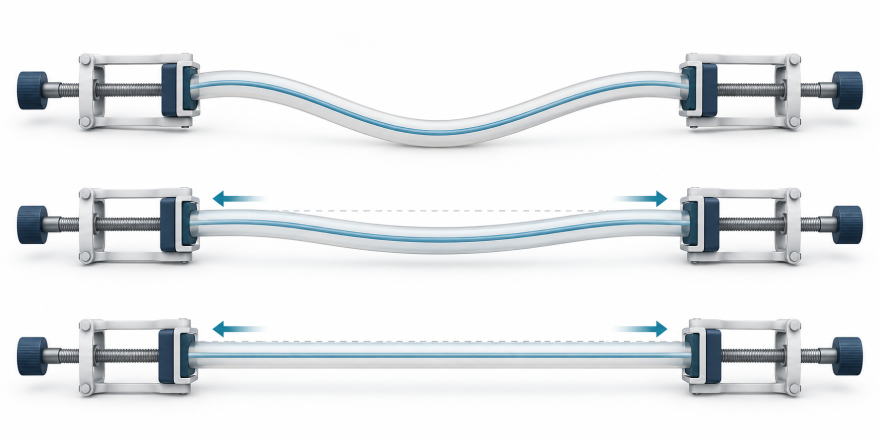
Penile traction therapy is one of the main nonsurgical tools used in Peyronie’s disease. It applies controlled mechanical tension to the penis with the goals of limiting length loss, improving curvature and, in some patients, restoring part of the length lost to the condition.
This page focuses specifically on Peyronie’s disease. Results from this population should not be treated as proof that the same device will produce identical cosmetic enlargement in men without Peyronie’s.
Why traction is used for Peyronie’s disease
Peyronie’s disease can cause curvature, shortening, narrowing and hourglass deformity because fibrous plaque alters how penile tissue expands. Traction provides a controlled mechanical stretch that may promote tissue remodeling over time.
What clinical evidence shows
In a randomized controlled trial of 110 men with Peyronie’s disease, RestoreX traction used for 30–90 minutes per day for three months produced significantly better outcomes than no therapy. Average penile length improved by 1.5 cm compared with no change in controls, and average curvature improved by 11.7 degrees while controls worsened slightly.
Longer follow-up from the same trial reported continued improvements with additional use. The study is important because it used randomized controls and objective measurements, but it still represents evidence for a specific device and patient population.
When traction may be used
Mayo Clinic includes traction therapy in both the acute and chronic phases of Peyronie’s disease. During the acute phase it may help limit length loss and curvature progression; during the chronic phase it may be used alone or alongside other treatments.
How long do you wear a traction device?
Wear time depends on the device. Traditional extenders may require several hours daily, while some newer condition-specific devices have been studied with shorter protocols. Mayo Clinic notes that daily use can range from about 30 minutes to several hours depending on the device.
Does traction straighten the penis completely?
Not necessarily. Clinical trials report average improvements, not guaranteed complete correction. Outcomes depend on baseline curvature, disease phase, plaque characteristics, device, adherence and other treatments. Severe or complex deformities may still require injections or surgery.
Traction with injections or surgery
Traction may be combined with other treatments. Mayo Clinic notes that collagenase treatment can be paired with traction or modeling, and traction can also be used after surgery in selected patients to improve length-related outcomes.
Safety
Clinical traction studies generally report mild and temporary adverse effects, but discomfort, bruising, skin irritation, numbness and swelling can occur. Follow the device-specific protocol and stop if significant pain, persistent numbness or tissue injury develops.
Which device should you choose?
The best choice depends on clinical evidence, comfort, wear protocol, curvature characteristics and whether you are being treated by a urologist. See our Best Traction Device for Peyronie’s Disease comparison for product-level analysis.
For the broader treatment context, see Peyronie’s Disease Treatment. For traction mechanics and non-Peyronie’s use, see our Penile Traction Devices & Therapy guide.
Where Traction Fits in a Peyronie’s Treatment Plan
Strongest evidence: Controlled studies support curvature and length improvement with specific traction protocols, particularly for devices studied directly in Peyronie’s disease.
Limited evidence: Benefits are generally partial, adherence-dependent and not proof that traction will eliminate a plaque or fully straighten every penis.
Unsupported: Evidence for one protocol should not be transferred automatically to an unstudied device with different mechanics or wear instructions.
Practical decision framework
Use traction as one component of a diagnosis-led plan. A buyer should compare expected curvature change, length preservation, daily wear burden and whether injections or surgery are also being considered—not shop by enlargement claims.
Useful comparisons: full treatment framework, device evidence comparison, result expectations.
References
Mayo Clinic: Peyronie’s disease diagnosis and treatment