Penile Traction Results: Length Gains, Timeline & Evidence
Penile traction can produce measurable changes, but the size of those changes depends heavily on who is being treated, which device is used, how long it is worn and what outcome is being measured. This is why a single before-and-after number is a poor way to judge traction.
This guide separates results in men seeking cosmetic length enhancement from results in men with Peyronie’s disease or post-surgical shortening. Those populations should not be treated as interchangeable.
What do studies report for penile length?
Systematic reviews of nonsurgical penile enhancement have found that traction devices can produce modest increases in measured length after months of regular use, but studies are small and protocols vary. European Association of Urology guidance therefore treats traction as a possible conservative option while emphasizing the limitations of the evidence.
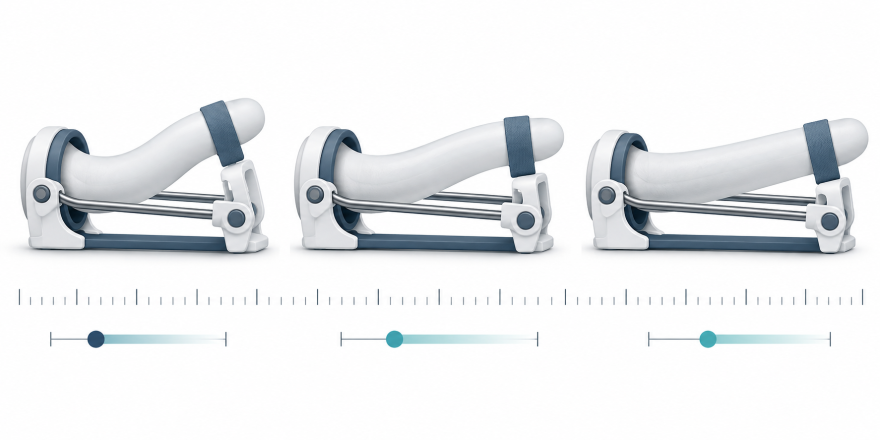
For men with Peyronie’s disease, a randomized controlled trial of RestoreX reported an average length improvement of 1.5 cm at three months compared with no change in controls, alongside curvature improvement. Those findings apply to men with Peyronie’s disease using that particular device and protocol; they are not proof that every consumer extender will produce the same result.
How long does it take to see results?
Traditional traction studies often involve several hours of daily wear over three to six months or longer. Some newer medical devices use shorter daily protocols. In the RestoreX Peyronie’s trial, participants used the device for 30 to 90 minutes per day for three months.
The broader lesson is that traction is a cumulative treatment. Results should be assessed over months, not days, and adherence is part of the intervention.
Length results vs curvature results
In Peyronie’s disease, success may mean reduced curvature, preserved length, improved stretched length or improved function—not simply cosmetic enlargement. The 2019 randomized RestoreX trial reported both curvature and length improvements, while later follow-up work found continued benefit with ongoing use.
For a condition-specific discussion, see penile traction for Peyronie’s disease.
Why before-and-after photos are weak evidence
Photos can change dramatically with camera angle, erection quality, lighting, measurement technique and positioning. Better evidence uses standardized measurements taken at defined time points with a known study population and protocol.
That is why this site prioritizes measured outcomes and published studies over manufacturer photo galleries when evaluating traction claims.
What affects traction results?
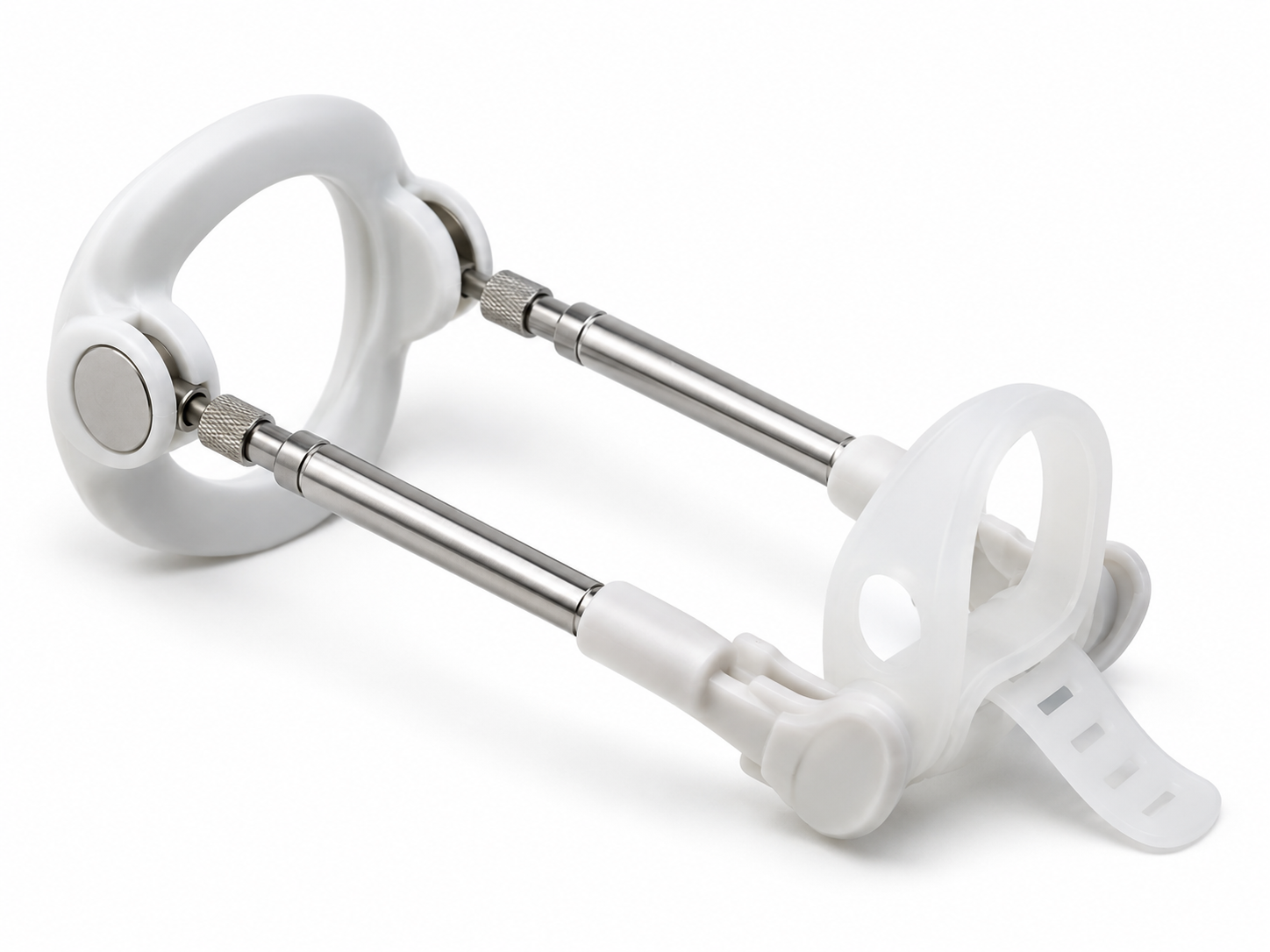
Important variables include baseline anatomy, the reason for treatment, device design, tension, hours of use, treatment duration, adherence and whether the person has scar tissue or post-surgical shortening. More tension is not automatically better and can increase discomfort or injury risk.
Do results last?
Long-term durability is less well studied than short-term outcomes, particularly for cosmetic use. Follow-up data exist for some medical traction studies, but product-specific claims of permanent enlargement should be evaluated against actual long-term measurements rather than assumed from the traction mechanism alone.
How to interpret a product’s results claim
Ask four questions: Was the exact device studied? Was the population similar to you? Was length measured objectively? And how long was the treatment and follow-up? Evidence from a different device or from men with Peyronie’s disease may support the concept of traction but does not prove an identical cosmetic result.
For the mechanics and evidence behind the treatment category, see our penile traction devices guide. For consumer device selection, see penis extenders and stretchers and our best penis extenders comparison.
How to Read a Traction Result Without Overpromising
Strongest evidence: Objective stretched or erect measurements taken with a defined protocol are more credible than visual impressions.
Limited evidence: Study averages describe groups, not guaranteed individual gains. Baseline anatomy, diagnosis, adherence and measurement technique can shift results.
Unsupported: A single dramatic testimonial or photo cannot establish permanent growth, and early temporary elongation should not be treated as a final result.
Practical decision framework
Before accepting a number, ask five questions: Was length or curvature measured? By whom? With which device? For how many daily hours and months? How many participants completed the protocol? Missing answers should reduce confidence.
Useful comparisons: traction evidence guide, device comparison, all enlargement methods.
References
Randomized controlled trial of RestoreX traction in men with Peyronie’s disease
RestoreX open-label and follow-up outcomes
Systematic review of interventions in normal men seeking penile enhancement