Peyronie’s Disease Treatment: Options, Traction, Injections & Surgery
Peyronie’s disease is not simply a cosmetic penile curve. It is a condition involving scar tissue that can cause curvature, shortening, pain, narrowing or erectile difficulty. Treatment depends on how long symptoms have been present, whether the condition is still changing, how severe the deformity is and how much it affects sexual function.
This page is an educational overview and is not a substitute for diagnosis by a urologist. New or worsening curvature, pain, a palpable plaque, or a sudden change in penile shape should be medically evaluated.
Acute vs chronic Peyronie’s disease
Mayo Clinic describes an acute phase in which scar tissue and curvature may still be changing and pain can occur, followed by a chronic phase when the condition has stabilized. The phase matters because treatment choices differ and surgery is generally deferred until the deformity is stable.
Penile traction therapy
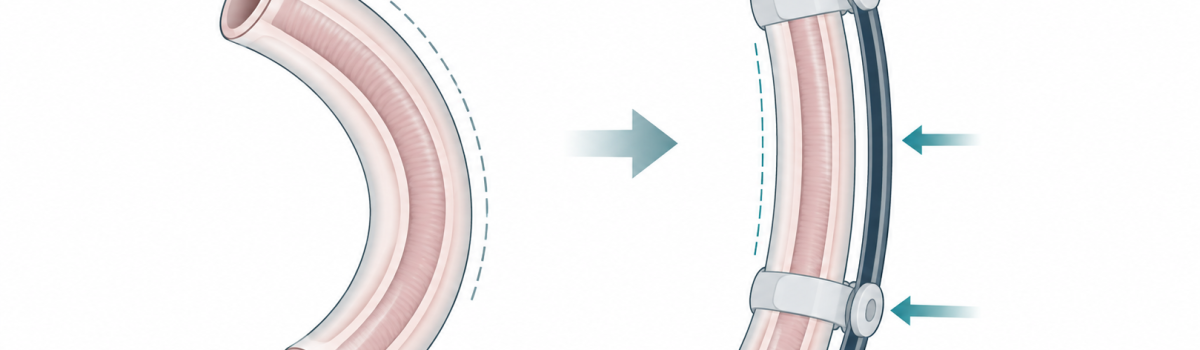
Traction therapy uses a mechanical device to apply controlled tension. Mayo Clinic includes traction among treatment options in both acute and chronic disease and notes that it can help preserve or improve length and limit curvature, depending on the device and protocol.
A randomized controlled trial of RestoreX in men with Peyronie’s disease reported significant improvements in stretched penile length and curvature compared with no treatment after three months of 30–90 minutes of daily use. Those findings are device- and population-specific.
See our dedicated penile traction for Peyronie’s disease guide and traction-device comparison for Peyronie’s disease.
Injections
Intralesional injections are used in selected patients. Collagenase clostridium histolyticum is the FDA-approved injectable treatment for certain adults with a palpable plaque and clinically significant curvature. Other injected medicines have also been used, but evidence and indications differ.
Injection therapy is not a do-it-yourself treatment and requires evaluation by a clinician familiar with Peyronie’s disease.
Oral medicines
Many oral treatments have been tried, but consistent evidence is lacking. Mayo Clinic notes that oral medicines are not recommended in the chronic phase because they have not been shown to be effective enough compared with other options.
Surgery
Surgery may be considered when disease is stable and the deformity significantly interferes with intercourse or quality of life. Techniques can include shortening the longer side, lengthening the shorter side with grafting, or penile prosthesis placement when erectile dysfunction is also severe.
The tradeoffs differ by procedure, including possible changes in length, sensation, erectile function and recurrence risk. Surgical decisions should be individualized with an experienced urologist.
Can a curved penis be straightened without surgery?
Sometimes, depending on the cause and severity. Traction, injections and observation may all play a role in selected patients. Congenital curvature is different from acquired Peyronie’s disease, so the first step is identifying the cause. See How to Straighten a Curved Penis.
When to see a urologist
Seek evaluation for new curvature, worsening deformity, painful erections, a palpable lump or plaque, penile shortening, narrowing or hourglass deformity, difficulty with penetration or erectile dysfunction. Earlier assessment can help distinguish active disease from a stable chronic condition and guide appropriate treatment.
Treatment Choice Depends on Phase and Function
Strongest evidence: The best-supported options address a diagnosed plaque and measurable deformity: traction, selected intralesional therapy and surgery in appropriate patients.
Limited evidence: No single option is best across acute pain, stable curvature, indentation, shortening and erectile dysfunction.
Unsupported: Oral supplements and home manipulation should not be presented as established substitutes for diagnosis-led care.
Practical decision framework
In the active phase, the priority is documenting change, pain and function. In stable disease, the decision turns more heavily on intercourse difficulty, curvature severity, erectile function and tolerance for procedural risk. Our content separates these branches because combining them into one generic “best treatment” list is misleading.
Useful comparisons: curvature decision guide, traction option, device comparison.
References
Mayo Clinic: Peyronie’s disease diagnosis and treatment
Randomized controlled trial of penile traction therapy in Peyronie’s disease